Peptide Purity Analysis Service
Peptide Pureness & Quantitation Screening
We have the ability of offering clients from very early peptide drug exploration phases to peptide analysis. We give all the technological details and instructions for every step of peptide synthesis and evaluation. The launch procedure of peptide formulations is complex, and a lack of scientific information impedes advancement. We develop in vitro release models, providing full release contours and kinetic design analysis to enhance item style. Among the most usual sources of confusion in peptide jobs is making use of different high quality terms as if they indicate the very same thing.
What Hplc Can Not Confirm Alone
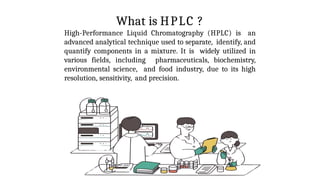
Theoretically, peptide pureness is quantified by the chromatogram created by reversed phase HPLC, and furthermore, we can get the number and loved one quantity of feasible byproducts by calculating the peak area. A high-grade chromatogram has a single, symmetrical main optimal with a level baseline on either side. " Trailing"-- where the peak trails off slowly on one side-- can show column troubles, sample overloading, or additional communications between the peptide and the stationary stage. In this arrangement, the stationary phase is hydrophobic (water-repelling), normally C18-bonded silica. The mobile stage is a slope of water and a natural solvent like acetonitrile, typically with a small amount of trifluoroacetic acid (TFA) to hone the optimals.
Not every application needs 99% purity, and filtration is a substantial part of peptide production cost. Trace quantities of solvents made use of during synthesis and purification-- acetonitrile, dimethylformamide (DMF), dichloromethane-- can continue to be in the final product. These are usually present at really low levels in properly made peptides and are governed by ICH Q3C guidelines for acceptable limits. If the target peptide's height make up 99.1% of the overall optimal location, the peptide is reported as 99.1% pure by HPLC. Numerous credible study peptide vendors use third-party laboratories; some conduct internal screening with publication of research laboratory qualifications.Recap: What A Research-grade Coa Must Consist Of
Nevertheless, attaining ultra-high pureness (state 99%) can be practically challenging and might not constantly be required, as we'll go over later on. The secret is comprehending what level of purity is sufficient for your requirements and exactly how pureness is identified to begin with. For a lot of study functions, high pureness indicates you can be certain that the huge bulk of the particles in your vial are the correct peptide, which assists guarantee speculative uniformity and reproducibility. Our workflow is designed to move from example context evaluation to interpretable peptide information with marginal analytical uncertainty. Tasks can range from one sample identification check to multi-lot comparability, recurring evaluation, solubility evaluation, or stability-focused analytical plans. Hydrophobic peptides, very standard series, modified constructs, and very closely associated analogs can be assessed with technique adjustments matched to their logical risks.By demanding peptides that come with confirmation of purity and identification, scientists can significantly decrease the danger of speculative artefacts. Conversely, using peptides that have actually passed third-party lab recognition helps make sure that the observed experimental results are really as a result of the desired peptide and not due to pollutants or errors. When you see peptides marketed as "research-grade," Cold Chain Shipping it describes their intended usage and the degree of making oversight. Research-grade peptides are made for research laboratory research study usage only-- they are not generated under pharmaceutical GMP standards and are not meant for usage as therapies or in humans. These peptides include a fundamental quality assurance package, normally consisting of HPLC purity analysis and MS confirmation of identification, ensuring they fulfill scientific criteria for purity and composition.
Why Peptide Chemical & Physical Evaluations Issue In Real Projects
- Net peptide web content describes how much actual peptide (by weight) remains in the vial relative to non-peptide elements like water, counter-ions (e.g., TFA), or buffer salts.
- Peptides from Maxed Out Substances are provided solely for laboratory study use and are not planned for human or veterinary purposes.
- Furthermore, techniques such as amino acid evaluation and HPLC are employed to validate the peptide's identification and pureness, making sure accurate characterization for numerous applications.
- Contact us today to review your peptide sequence, example standing, and logical objectives.
- HPLC divides peptide mixtures and can spot even minor pollutants listed below 1% of the sample [4]
As the percent of organic solvent progressively increases throughout the run, molecules are released from the column in order of their hydrophobicity-- the much more hydrophobic a peptide, the longer it requires to elute (wash off). Since contaminations typically differ from the target peptide by at the very least one amino acid, they have somewhat various hydrophobicities and appear as different heights on the chromatogram. The key point is not Research Materials to confuse purity (HPLC percentage of the primary peptide vs contaminations) with total material. For speculative planning (like calculating molar focus), both purity and web content work numbers, yet purity is what reflects the chemical homogeneity of the peptide example.
Complementing HPLC, laboratories use Mass Spectrometry (typically paired as LC-MS) to confirm the peptide's molecular weight and series identification. Mass spectrometry offers molecular confirmation by detecting the specific mass of the peptide and any kind of co-eluting species or abbreviated series with high precision. With each other, HPLC and MS data permit experts to validate that the peptide's composition matches what it ought to be (right amino acid sequence and expected alterations) which no significant pollutants are present. Each peptide has a various expected molecular weight, so mass confirmation is not a common badge; it is compound-specific proof. For a deeper identity-focused explanation, see Mass Spectrometry Peptide Confirmation. Identification screening confirms that what was synthesised is in fact the desired sequence.